

What Are the First Signs of Rodents in an Attic or Garage?
The first signs of rodents in an attic or garage are small droppings, scratching or scurrying sounds, gnaw marks, shredded nesting materials, and unusual odors. Mice and rats often enter these spaces looking for food, warmth, and shelter. Identifying these warning signs early can help homeowners prevent property damage, contamination, and a larger rodent infestation.
Rodents are particularly troublesome when they settle into areas of the home that homeowners rarely inspect. Attics, garages, and storage spaces provide convenient hiding places where mice and rats can remain unnoticed for weeks. By the time a homeowner spots a rodent, there may already be additional activity behind walls or above ceilings.
At Home Run Pest & Termite Control, we understand how frustrating it can be to discover unwanted pests inside your home. Our experienced pest control professionals help homeowners identify rodent activity, locate potential entry points, and develop effective treatment and prevention strategies. Whether you hear scratching overhead or notice suspicious droppings in your garage, recognizing the early warning signs can make a significant difference in protecting your home.
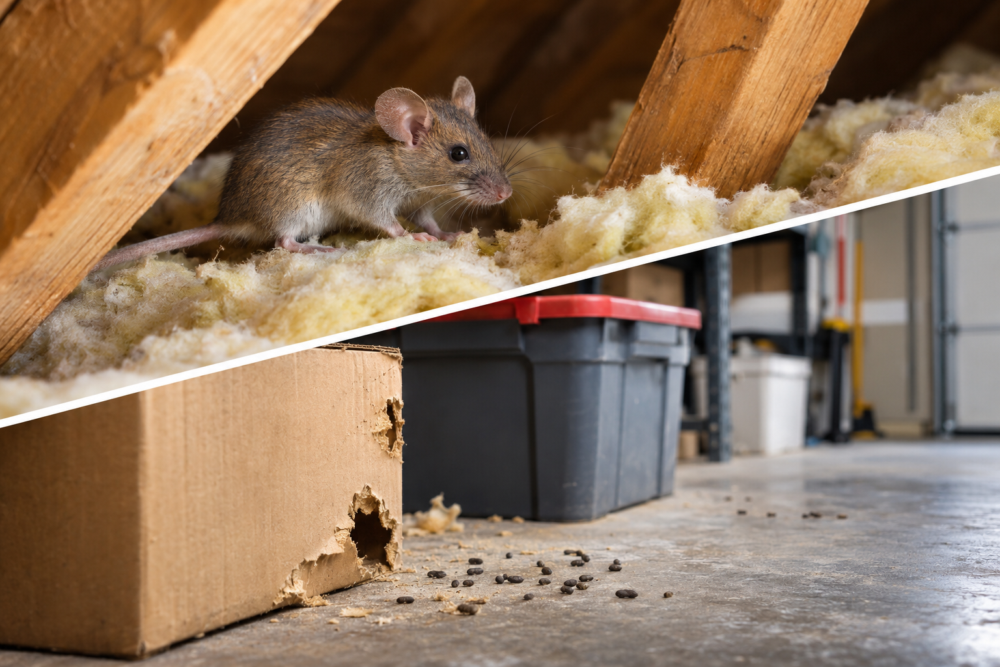
How to Identify a Rodent Infestation Before It Gets Worse
Rodents are naturally cautious and often stay hidden during daylight hours. Fortunately, they leave behind several clues that can reveal their presence.
1. What Do Rodent Droppings Look Like in an Attic or Garage?
Rodent droppings are among the most reliable early indicators of mice or rats inside a home. They are commonly found along walls, near stored belongings, around insulation, and close to potential food sources.
Mouse droppings are typically small, dark, and pointed at the ends. Rat droppings are generally larger, although their appearance varies by species.
Common locations to check include:
- Attic corners and areas near insulation
- Garage shelving and storage boxes
- Behind appliances or stored equipment
- Along walls and near possible entry points
- Areas where pet food or birdseed is stored
According to the Centers for Disease Control and Prevention (CDC), rodent urine, droppings, and nesting materials can expose people to harmful pathogens.
Important: Never sweep or vacuum rodent droppings while they are dry. Follow CDC cleaning recommendations, including wearing gloves, thoroughly wetting contaminated material with an appropriate disinfectant, and allowing the recommended contact time before removal.
2. Why Do You Hear Scratching or Scurrying Sounds at Night?
Scratching, scurrying, or gnawing noises after dark can indicate rodents moving through an attic, wall cavity, or garage.
Mice and rats are frequently active at night, when household activity is lower and they can move around with less disturbance.
Homeowners may notice:
- Light scratching above ceilings
- Quick footsteps or scurrying inside walls
- Gnawing sounds near wooden structures
- Rustling noises around attic insulation
- Movement behind stored garage items
Although rodents are a common cause of these noises, squirrels and other wildlife can produce similar sounds.
If noises occur repeatedly in the same location, a professional inspection can help identify the source before the problem becomes more serious.
3. What Damage Can Rodents Cause in an Attic or Garage?
Rodents can damage insulation, electrical wiring, cardboard boxes, stored belongings, and other household materials through repeated gnawing and nesting activity.
Their front teeth grow continuously, which encourages them to chew on various materials.
Signs of rodent-related damage may include:
- Small chew marks on cardboard or plastic containers
- Torn or shredded insulation
- Damaged food packaging
- Gnawed wooden surfaces
- Chewed electrical wiring
- Holes around garage door seals or other vulnerable openings
Electrical damage is especially concerning because damaged wiring can create a fire hazard.
If you discover exposed or chewed wires, avoid handling them and contact a qualified electrician.
The sooner rodent activity is identified, the easier it may be to limit further damage.
4. How Do Mice and Rats Get Into Attics and Garages?
Mice and rats enter homes through openings around foundations, rooflines, vents, doors, and utility penetrations.
Even surprisingly small gaps can provide access. The CDC notes that mice can fit through openings approximately the width of a pencil, about one-quarter inch.
Common entry points include:
- Gaps beneath garage doors
- Damaged weatherstripping
- Openings around pipes and utility lines
- Unprotected roof vents
- Cracks near foundations
- Damaged soffits or roofline materials
Garages are especially vulnerable because doors frequently open and close, and stored belongings create hiding places.
Homeowners should inspect these areas regularly and seal accessible gaps using appropriate rodent-resistant materials. Larger openings may require metal flashing, hardware cloth, or professional repairs.
Before sealing an active entry point, confirm that rodents will not be trapped inside the structure.
5. How Can You Prevent Rodents From Nesting in Your Home?
The most effective rodent prevention strategy combines entry-point exclusion, sanitation, clutter reduction, and ongoing monitoring.
Rodents are attracted to environments that provide easy access to food, water, and shelter.
To make your attic and garage less inviting:
- Seal potential entry points. Inspect doors, vents, rooflines, and foundation gaps.
- Store food securely. Keep pet food, birdseed, and other food products in tightly sealed, rodent-resistant containers.
- Reduce clutter. Organize storage areas and avoid leaving unnecessary cardboard or nesting materials on the floor.
- Address moisture problems. Repair leaks and eliminate accessible water sources.
- Inspect regularly. Look for fresh droppings, gnaw marks, and disturbed insulation.
Professional rodent control services can provide additional support when signs of activity continue.
At Home Run Pest & Termite Control, identifying how rodents enter and move through a property is an important part of developing a practical pest management strategy.
Frequently Asked Questions About Rodents in Attics and Garages
What is usually the first sign of mice in an attic?
Small droppings, nighttime scratching sounds, and disturbed insulation are common early signs. Some homeowners notice noises before seeing any physical evidence.
Can you have rodents in your attic without seeing them?
Yes. Rodents frequently remain hidden in insulation, wall cavities, and storage areas. Droppings, gnaw marks, and unusual sounds may be the only visible clues.
Are rodents in the garage dangerous?
Rodents can contaminate surfaces, damage stored belongings, and chew electrical wiring. Their droppings and urine can also create health concerns.
When should you call pest control for rodents?
Contact a professional when you find droppings, hear recurring scratching noises, discover gnaw damage, or suspect rodents are entering through structural openings. Early intervention can help prevent a larger infestation.
Protect Your Home With Professional Rodent Control
Rodents can cause significant problems when they settle into attics, garages, and other hidden spaces. Recognizing the warning signs early is one of the best ways to protect your property.
Don’t wait for a small rodent problem to become a major infestation. Contact Home Run Pest & Termite Control today to learn more about professional rodent control services and how we can help keep unwanted pests out of your home!