

Why Do Ants Keep Coming Inside North Texas Homes in Late Summer?
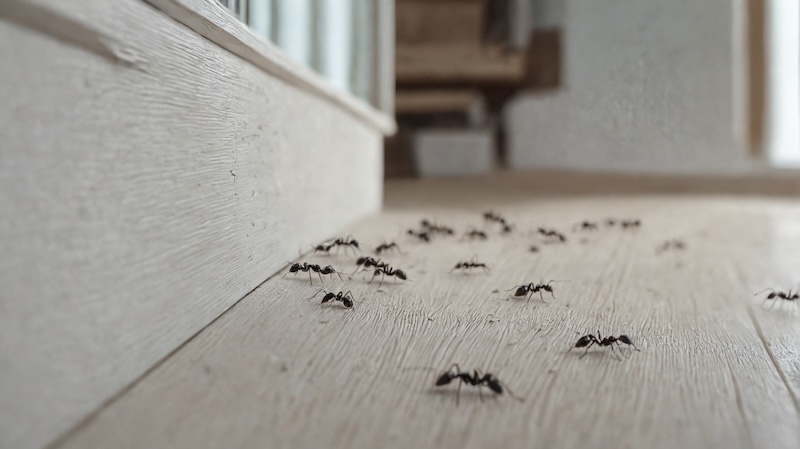
Ants often come inside North Texas homes in late summer because prolonged heat and dry conditions reduce outdoor sources of water and food. They follow tiny openings around doors, windows, foundations, plumbing, and utility lines to reach moisture, food, and cooler shelter indoors. Eliminating these attractants, sealing entry points, and targeting the colony are the most effective ways to stop recurring ant problems.
At Home Run Pest & Termite Control, we understand that North Texas pest problems change with the seasons. Late summer can be especially frustrating for homeowners who suddenly discover trails of ants around kitchen counters, bathrooms, sinks, pet bowls, or windows. Our team provides professional home pest control designed around the pests and conditions common to North Texas, with an emphasis on identifying the source instead of simply treating the ants you can see. Whether ants are nesting outdoors and foraging inside or have established a colony closer to your home, the right pest control strategy can help eliminate the current problem and reduce the chance that ants return.
What Causes Late-Summer Ant Problems in North Texas Homes?
North Texas heat and dry weather can make homes more attractive to ants because indoor spaces provide dependable access to water, food, and shelter. Texas A&M AgriLife Extension reports that ants are among the most common household pests in Texas, and most species that invade homes actually maintain their nests outdoors.
This is particularly relevant during periods of intense summer heat. Texas A&M AgriLife experts have reported that extended hot, dry weather can push ants and other pests indoors as they search for food and water.
For North Texas homeowners, several conditions can contribute to late-summer ant activity:
- Dry soil and reduced outdoor moisture can send ants searching for water.
- Kitchens and pantries provide crumbs, grease, sugar, and other dependable food sources.
- Bathrooms, sinks, plumbing leaks, and pet water bowls provide moisture.
- Cracks around foundations, windows, doors, pipes, and utility penetrations create entry points.
- Mulch, landscaping, stones, wood, and vegetation near the foundation can provide outdoor nesting areas.
The result is a familiar late-summer problem: an outdoor colony discovers a reliable resource inside the house, then workers establish a trail between that resource and the nest.
Why Do Ants Suddenly Appear in the Kitchen or Bathroom?
Ants commonly appear in kitchens and bathrooms because these rooms combine two things colonies need most, food and moisture.
A few crumbs beneath an appliance, residue around a trash container, a dripping faucet, condensation, or moisture around plumbing may be enough to support persistent ant activity. The U.S. Environmental Protection Agency recommends reducing pest problems by removing accessible food and water, including cleaning spills and crumbs, securing food, fixing plumbing leaks, and not leaving pet food and water out overnight.
If you see a line of ants, wiping away the visible trail may provide temporary relief, but it does not necessarily solve the underlying infestation. Worker ants are only one part of a much larger colony.
What Types of Ants Commonly Invade Texas Homes?
Correct ant identification matters because different ant species have different nesting habits, food preferences, and control requirements.
Texas A&M AgriLife emphasizes identifying the ant species as an important first step in managing household ants. Some species nest inside structures, while others maintain outdoor nests and enter homes only to forage.
North Texas homeowners may encounter several kinds of ants around their properties, including fire ants, carpenter ants, Argentine ants, acrobat ants, and other household ant species.
Carpenter ants deserve particular attention when activity is persistent. Texas A&M AgriLife notes that carpenter ants can nest or forage inside homes and are associated with areas containing moisture, leaks, or damaged wood. Unlike termites, carpenter ants do not eat wood. Instead, they excavate it to create nesting galleries.
Seeing ants repeatedly in the same location, particularly around damp wood, wall voids, windows, or plumbing, is a good reason to consider a professional inspection.
Why Do Ants Keep Coming Back After You Spray Them?
Ants often return after surface spraying because killing visible workers does not necessarily eliminate the colony or queen.
This is one of the biggest challenges with DIY ant control. Texas A&M AgriLife explains that spraying ant trails may kill only a small number of foraging workers while leaving the colony intact. With certain ants, inappropriate treatment can even cause colonies to split into additional colonies.
Effective pest control services therefore focus on more than the ants walking across a countertop. Depending on the species and infestation, control may involve identifying trails and nesting areas, reducing food and moisture, sealing potential entrances, strategically using appropriate bait or other treatments, and addressing exterior colonies.
Baits can be especially useful for certain species because workers carry the material back toward the colony. However, bait choice and placement matter, and different species may respond differently. This is one reason professional ant identification can save homeowners from repeatedly treating the symptoms without reaching the source.
How Can You Keep Ants Out of Your North Texas Home?
The best long-term ant prevention strategy combines sanitation, moisture control, exclusion, and targeted pest management.
Homeowners can make their property less attractive to ants by taking a few practical steps:
- Clean up food quickly. Wipe counters, sweep floors, and clean beneath appliances where crumbs and grease can accumulate.
- Store food securely. Keep pantry goods, sweets, and pet food in tightly sealed containers.
- Reduce moisture. Repair dripping faucets and plumbing leaks, and check sinks, bathrooms, and other damp areas.
- Seal entry points. Inspect gaps around doors, windows, pipes, utility lines, and other exterior openings.
- Check the exterior. Look for active trails, mounds, landscaping debris, dead wood, and other potential nesting areas near the home.
- Avoid relying only on surface sprays. Killing the ants you see may not reach the colony responsible for the infestation.
- Schedule professional pest control when activity persists. An experienced exterminator can identify the ant, locate likely nesting or foraging areas, and select a treatment strategy appropriate for the infestation.
These steps follow the principles of Integrated Pest Management, or IPM. The EPA describes IPM as an approach that combines knowledge of pest biology with practical control methods to manage pests effectively while reducing unnecessary risks.
When Should You Call a Pest Control Company for Ants?
Professional pest control is worth considering when ants repeatedly return, appear in multiple rooms, emerge from walls or structural gaps, or cannot be traced to an obvious food source.
A recurring infestation can indicate that the colony has not been eliminated or that conditions around the property continue to support ant activity. Professional pest control can also be valuable when you cannot confidently identify the species, since treatments that work well for one type of ant may not be appropriate for another.
If you are comparing pest control companies or searching for pest control near me, look for a provider familiar with North Texas ant species and seasonal pest patterns. Local knowledge matters because the combination of high summer temperatures, dry periods, irrigation, landscaping, and residential construction can influence where ants nest and how they enter homes.
Frequently Asked Questions About Ants in North Texas Homes
Does seeing ants inside mean there is a nest in my house?
Not necessarily. Texas A&M AgriLife reports that most ant species invading Texas homes nest outdoors and enter structures to forage. Persistent activity from walls or other interior areas, however, can indicate an indoor or satellite nest.
Are ants coming inside because they are looking for water?
Yes, they can be. During prolonged hot and dry Texas weather, ants may enter residences in search of water, according to Texas A&M AgriLife Extension experts.
Will killing the ants I see get rid of the infestation?
Usually not if an established colony is responsible. Surface treatments may kill foraging workers without eliminating the nest, which is why identifying and targeting the colony is important.
What is the difference between carpenter ants and termites?
Carpenter ants excavate wood to create nesting galleries but do not eat the wood. Termites consume cellulose and can cause structural damage through feeding.
Stop Late-Summer Ants Before They Take Over Your Home
Late-summer ant activity does not have to become a recurring problem. By removing food and moisture sources, closing potential entry points, and addressing the colony itself, North Texas homeowners can significantly reduce unwanted ant activity indoors.
Ready for professional home pest control? Contact Home Run Pest & Termite Control to schedule service and help keep ants out of your North Texas home.