

5 Critical Entry Points Pests Use to Invade Your Home Every Spring
How to Find and Seal the Gaps, Cracks, and Openings That Let North Texas Pests Inside
Every spring, as temperatures climb across the Dallas-Fort Worth area, the same thing happens in neighborhoods throughout Wylie, Sachse, Murphy, Rockwall, and the surrounding communities: pests that have been waiting out the cooler months start looking for food, water, and shelter, and they are very good at finding it. The frustrating truth is that most pest invasions do not happen because a door was left open. They happen through gaps and entry points that homeowners rarely think about until a technician points them out. At Home Run Pest and Termite Control, we are a family-owned company that has been protecting DFW homes since 2005. Every technician on our team is personally trained by our owners, and we bring that hands-on expertise to every inspection and treatment. Understanding where pests get in is the first step toward keeping them out. Here are the five entry points we see exploited most often in North Texas homes every spring.
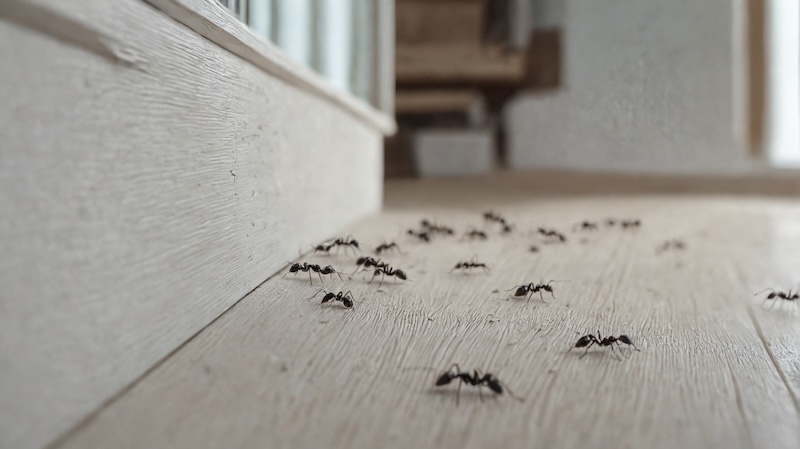
Entry Point 1: Door Sweeps and Thresholds
The gap at the bottom of an exterior door is one of the most common and most overlooked pest entry points in any home. A door sweep that has worn, cracked, or separated from the door frame leaves an opening that is more than sufficient for ants, cockroaches, crickets, and spiders. Mice, which can compress their bodies to fit through a gap roughly the diameter of a pencil, can also enter through a threshold that has even minor damage or misalignment.
In DFW, where fire ants are aggressive and persistent, a gap at the base of a door leading to an attached garage or utility room is a particularly common entry corridor. Ants do not need a large opening, and they will find whatever gap exists along the full length of the door bottom if the sweep is not making solid contact with the threshold.
Check every exterior door by sliding a piece of paper under it with the door closed. If the paper slides through without resistance, the sweep needs replacement or adjustment. This is one of the simplest and most cost-effective exclusion steps a homeowner can take before pest season is underway.
Entry Point 2: Window Screens and Frame Gaps
Window screens that are torn, bent, or improperly seated in their frames allow flying insects direct access to the interior of your home, particularly in spring when mosquitoes, flies, and gnats become active across North Texas. A screen that looks intact from across the room may have small tears or gaps at the corners that are entirely sufficient for pest entry.
Beyond the screen itself, the frame and seal around the window are worth inspecting. Caulk that has cracked or separated from aging or thermal movement creates gaps along the window perimeter that ants and spiders exploit readily. In North Texas’s climate, the combination of summer heat expansion and winter cold contraction cycles through window and door caulk fairly aggressively, making annual inspection and recaulking a worthwhile spring maintenance task.
Pay particular attention to windows at or near ground level and those adjacent to landscaping, where pest pressure is highest. Any window that opens to a porch, patio, or landscaped area should be confirmed fully screened and sealed before outdoor activity increases in late spring.
Entry Point 3: Utility Line and Pipe Penetrations
Every location where a pipe, conduit, cable, or utility line enters your home through an exterior wall is a potential pest entry point. These penetrations are created during construction and are rarely sealed with the thoroughness that pest exclusion requires. Over time, whatever sealant was originally applied shrinks, cracks, or separates from the pipe or conduit, leaving gaps that pests navigate with ease.
Common locations to inspect include:
- Where HVAC refrigerant lines enter the home through exterior walls
- Where plumbing supply and drain lines pass through foundation slab or exterior walls
- Where electrical conduit, cable TV, and internet lines enter
- Where gas lines penetrate the foundation or exterior wall
- Where dryer vents exit the home, particularly where the vent housing meets the siding or brick
In DFW homes, the gap around refrigerant lines entering through exterior walls is one of the most commonly identified entry points during professional pest inspections. The insulation wrap on the lines leaves a gap between the line and the wall penetration that is large enough for cockroaches, mice, and other pests to pass through. Steel wool packed around the penetration, followed by appropriate sealant, is an effective short-term remedy, though professional exclusion work provides more durable results.
Entry Point 4: Garage Doors and Garage Perimeter
Attached garages are one of the primary staging areas for pest entry into DFW homes, and the garage door itself is often the initial point of entry. Garage door seals, both the bottom seal along the floor and the side and top weatherstripping around the frame, deteriorate with use and UV exposure. When these seals fail, the garage becomes easily accessible to mice, rats, roaches, and the full range of insects that are active in spring.
Once pests are inside the garage, the path to the home’s interior is much shorter. The door from the garage to the living space is frequently less thoroughly sealed than exterior entry doors, and the garage itself often contains food sources including pet food, birdseed, and garbage that attract and sustain pest populations.
For homeowners in neighborhoods like Woodbridge, Bozman Farm Estates, and Sage Creek in Wylie, where established landscaping around garage entries creates additional harborage adjacent to the garage door, this entry point deserves particular attention before spring pest activity peaks.
Entry Point 5: Foundation Cracks, Weep Holes, and Vents
North Texas’s expansive clay soils move seasonally, and that movement works on concrete foundations over time, creating hairline cracks that pests, particularly subterranean termites, ants, and cockroaches, exploit readily. Foundation cracks along the exterior perimeter, even ones that appear minor, can connect to the interior of wall cavities and provide direct access to the structure.
Weep holes in brick veneer construction are intentional openings that allow moisture to escape from behind the brick. They are also standard entry points for pests and cannot be sealed completely without creating moisture problems. Pest-specific weep hole covers, which allow drainage while blocking pest entry, are an effective solution that most homeowners are unaware of.
Crawl space and attic vents that have damaged or missing screens allow rodents and insects direct access to the areas of the home with the least daily traffic and oversight. These are the locations where pest problems develop furthest before they are noticed, which is why they warrant inspection at the beginning of every season.
What Professional Exclusion Work Adds That DIY Cannot
Walking the exterior of your home and addressing obvious gaps is a worthwhile spring exercise. What it cannot replicate is the systematic, experienced assessment that a trained pest control technician conducts. Home Run Pest and Termite Control’s inspection process identifies entry points that homeowners routinely miss, not because the homeowner is not diligent, but because knowing exactly where and how pests enter requires the kind of pattern recognition that comes from inspecting hundreds of DFW homes.
Our perimeter treatments work in tandem with exclusion recommendations, creating a layered defense that addresses both the structural vulnerabilities and the pest populations already present around the exterior of the home. Low-odor, low-toxicity products applied to eaves, overhangs, window and door perimeters, and the foundation perimeter create barriers that intercept pests before they reach entry points.
Ready to Close the Entry Points Before Pests Find Them? Contact Home Run Pest and Termite Control Today.
Home Run Pest and Termite Control serves homeowners and businesses throughout Wylie, Sachse, Murphy, Rockwall, and the greater DFW area with honest, effective pest management backed by nearly two decades of North Texas experience. Contact us today for your free pest control quote and let our team identify the entry points that are putting your home at risk this spring.