

How Can North Texas Homeowners Reduce Mosquitoes After Late-Summer Rain?
North Texas homeowners can reduce mosquitoes after late-summer rain by removing standing water, cleaning water-holding containers, maintaining gutters and yards, and treating water that cannot be drained. Because some mosquitoes can develop from egg to adult in just 7 to 10 days, acting soon after rainfall can help interrupt the breeding cycle before mosquito populations increase.
At Home Run Pest & Termite Control, we know how quickly a North Texas backyard can change after a late-summer rain. A welcome storm can cool things down temporarily, but the water left behind in gutters, planters, toys, tarps, birdbaths, and low spots can create ideal mosquito breeding conditions. Our team helps homeowners address both the places where mosquitoes develop and the areas where adult mosquitoes rest. By combining practical prevention with professional pest control services, families can spend more time enjoying patios, pools, lawns, and outdoor gathering spaces without constantly swatting mosquitoes.
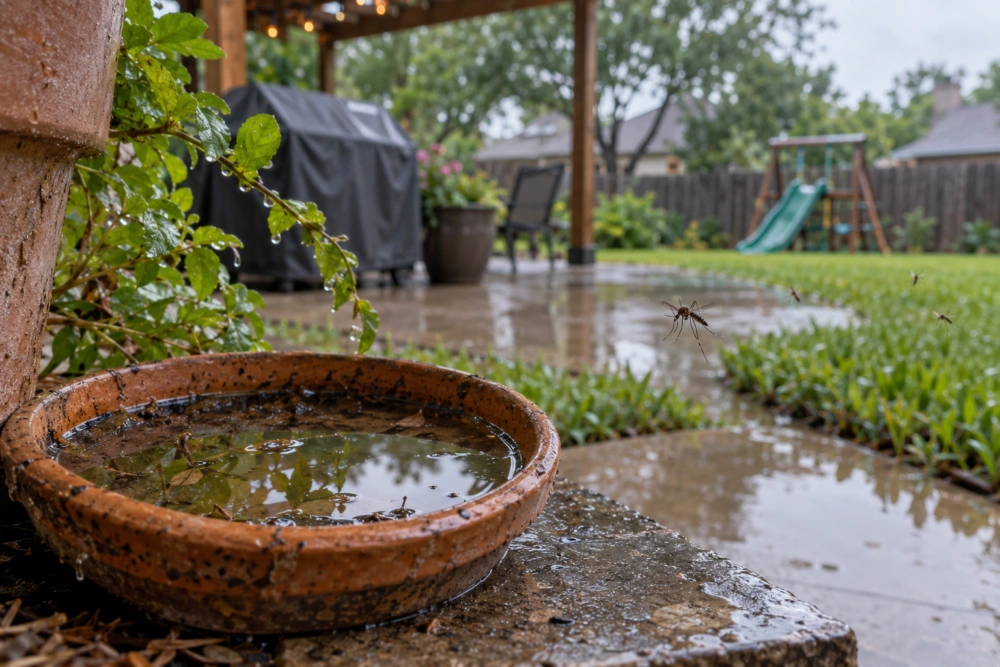
Mosquito Control After Rain: How to Keep Your North Texas Yard from Becoming a Breeding Ground
Rain does not automatically create a mosquito infestation, but standing water left after rainfall gives mosquitoes the habitat they need to reproduce. The Centers for Disease Control and Prevention explains that mosquito larvae and pupae live in water, which makes removing or treating standing water one of the most important parts of mosquito control.
For North Texas properties, late-summer storms combined with continued warm temperatures can make overlooked water sources especially important. Even small containers can hold enough water for mosquitoes to lay eggs.
Why Do Mosquitoes Increase After It Rains?
Mosquito numbers can increase after rainfall because rain fills containers, depressions, tree holes, gutters, and other areas where mosquito eggs can hatch and larvae can develop.
According to the CDC, some mosquito eggs are laid in containers just above the waterline and hatch when rain or irrigation covers them. Aedes mosquitoes can complete development from egg to flying adult in approximately 7 to 10 days, which means a small amount of forgotten water can produce mosquitoes surprisingly quickly.
Common post-rain breeding sites around North Texas homes include:
- Flowerpot saucers
- Buckets and watering cans
- Children’s toys
- Birdbaths
- Clogged gutters and downspouts
- Wheelbarrows
- Tarps and outdoor furniture covers
- Trash or recycling containers
- Pool covers
- Pet bowls left outdoors
- Tires
- Tree holes
- Low areas where water remains pooled
Checking these areas soon after a storm is one of the simplest ways to reduce mosquito activity around your property.
What Should You Do With Standing Water After Rain?
Dump, drain, cover, or treat standing water as soon as practical, then inspect your property weekly for places where water has collected again.
The CDC recommends that homeowners empty and scrub, turn over, cover, or throw away water-holding items once a week. Scrubbing matters because mosquito eggs can remain attached to the inner walls of containers even after the water itself is dumped.
A good post-rain yard inspection should include these steps:
- Dump water from small containers. Empty buckets, toys, flowerpot saucers, and other movable objects.
- Scrub containers before refilling them. This can help remove mosquito eggs attached to the surfaces.
- Clear gutters and drainage areas. Make sure rainwater can move away from your home instead of sitting in clogged gutters or low spots.
- Turn unused items upside down. Wheelbarrows, kiddie pools, and similar items can collect water during the next storm.
- Keep pools maintained. The EPA recommends keeping swimming pool water treated and circulating.
- Cover rain barrels and water storage containers. Use secure lids or appropriate screening to prevent mosquitoes from reaching the water.
Making this inspection part of your routine after North Texas thunderstorms can remove mosquito habitat before larvae have time to become biting adults.
What If You Cannot Drain the Standing Water?
Standing water that cannot be dumped, covered, or removed may require an appropriate mosquito larvicide used according to its label.
The CDC recommends larvicides for certain water sources that cannot reasonably be eliminated, such as some rain barrels, fountains, pool covers, gutters, or other persistent water-holding areas. Larvicides target immature mosquitoes before they become flying adults.
One commonly used biological larvicide is Bacillus thuringiensis israelensis, or Bti. The EPA reports that Bti specifically affects the larvae of mosquitoes, black flies, and fungus gnats and has minimal toxicity to honey bees. Homeowners should always follow the individual product label because approved uses vary.
Never assume every puddle needs a pesticide. If water can simply be dumped or drained, removing it is usually the first step.
How Can You Make Your Yard Less Attractive to Adult Mosquitoes?
Reducing moisture and dense resting areas can make your yard less hospitable to adult mosquitoes while removing standing water addresses their breeding sites.
Mosquitoes often rest in shaded, humid areas during parts of the day. The CDC notes that adult mosquitoes may shelter beneath patio furniture, carports, garages, and other dark or humid locations.
Around your home, consider:
- Mowing the lawn regularly
- Cutting back excessive weeds and vegetation near outdoor living areas
- Removing unnecessary yard clutter
- Keeping gutters clear
- Fixing drainage problems
- Removing water trapped on tarps and outdoor covers
- Repairing damaged window and door screens
The CDC specifically recommends regular mowing and weed reduction as part of residential mosquito management.
These changes do not guarantee a mosquito-free property, but they can support a broader home pest control strategy by reducing the conditions mosquitoes prefer.
When Is Professional Mosquito Control Worth It?
Professional mosquito control can be useful when mosquito activity remains high despite eliminating standing water, especially when your property contains numerous resting or breeding areas.
Mosquito management is most effective when it targets more than one part of the mosquito life cycle. The CDC notes that professional mosquito control programs often use multiple methods to address larvae, pupae, and adult mosquitoes rather than relying on a single treatment.
A professional exterminator can inspect your property for overlooked breeding sites, identify areas where adult mosquitoes are likely to rest, and determine what treatment approach is appropriate for your yard.
This can be particularly helpful for North Texas homeowners who regularly use patios, pools, play areas, and other outdoor spaces during the long warm season. Professional mosquito treatments combined with homeowner prevention can provide a more comprehensive approach than occasional spraying alone.
Frequently Asked Questions About Mosquitoes After Rain
How quickly can mosquitoes appear after rain?
Some Aedes mosquitoes can develop from egg to adult in approximately 7 to 10 days, according to the CDC. Removing standing water soon after rainfall can help interrupt that life cycle.
How much standing water do mosquitoes need to breed?
Mosquitoes can use surprisingly small water-holding containers. The CDC identifies bowls, cups, tires, barrels, fountains, and similar containers as potential breeding habitats, so even small pockets of standing water should not be overlooked.
Should I dump standing water after every rain?
Yes. Dumping unnecessary standing water after rainfall is one of the most effective steps homeowners can take. The CDC also recommends inspecting, emptying, and scrubbing water-holding containers at least once a week.
Does spraying mosquitoes solve the whole problem?
Not necessarily. Adult mosquito treatments may reduce mosquitoes already flying around your property, but long-term control also requires addressing eggs, larvae, and standing-water breeding sites. The EPA recommends an integrated approach that includes habitat reduction, barriers, larval control, and adult mosquito control when appropriate.
Take Control of Mosquitoes After the Next North Texas Rain
Late-summer rain can turn unnoticed areas of your yard into mosquito breeding sites in a matter of days. Removing standing water, maintaining your lawn and gutters, treating water that cannot be drained, and addressing adult mosquito resting areas can significantly reduce the conditions that allow populations to grow.
Ready to enjoy your yard with fewer mosquitoes? Contact Home Run Pest & Termite Control for professional mosquito and pest control services in North Texas.